
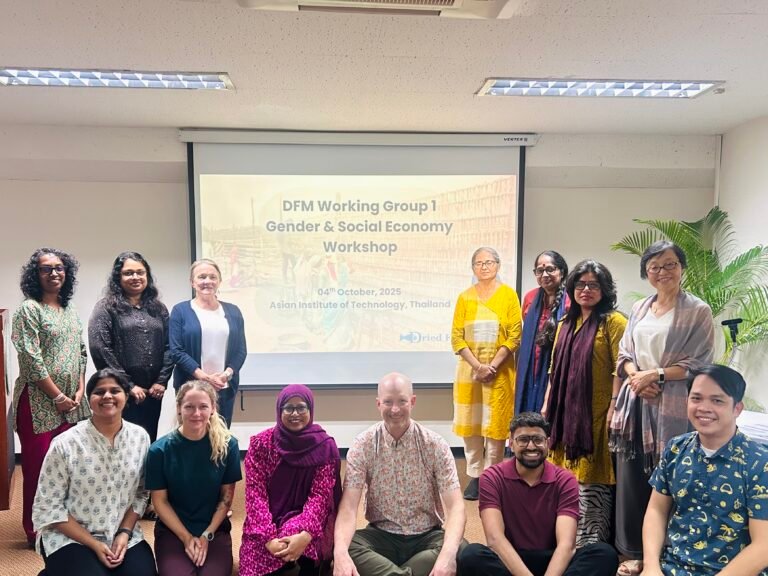
Following the 9th Global Conference on Gender in Aquaculture and Fisheries (GAF9), DFM Working Group 1 convened an edited volume workshop on 4 October 2025 at the AIT Conference Centre in Thailand. The workshop focused on developing a collective publication on gender and the social economies of dried fish, connecting the group’s ongoing synthesis paper with case studies presented at GAF9.
The opening session, led by Derek Johnson, framed the workshop around the relationship between these outputs. The aim was to consider how a shared analytical framework could connect the synthesis paper and proposed edited volume while giving individual contributors space to develop their own research findings.
The morning programme centered on the synthesis paper’s conceptual and theoretical foundations. A dedicated discussion of the coding structure and emerging themes was designed to review how evidence from different studies had been organized and interpreted. This provided the basis for considering how the same framework could support the volume’s chapters and where further clarification or refinement might be needed.
In the afternoon, chapter contributors were invited to reflect on their case studies and explain how their findings related to the synthesis framework. These short contributions were intended to help identify connections, overlaps, and complementary perspectives across the proposed chapters. The format brought attention to the relationship between detailed local research and the broader comparative questions that DFM seeks to address.
The later sessions turned to the practical work of developing the volume. The agenda included organising case studies into thematic sections, mapping out a draft table of contents, and discussing editorial responsibilities. Planning also covered a writing timeline for chapter submissions, feedback, and revisions, alongside work towards an initial book proposal using the Routledge proposal template.
Across these discussions, the workshop placed collaborative interpretation at the centre of the publication process. Contributors were asked to consider how their individual studies could inform a shared account of gender and dried fish economies. This approach allows the proposed volume to connect findings across settings while retaining the distinctive contexts and experiences documented through fieldwork.
The workshop’s planned outputs included chapter outlines, a proposed volume structure, and clearer responsibilities for the writing process. Together, these elements outlined a route for developing DFM’s accumulated research into a collective publication, with continued dialogue and feedback built into the work ahead.