
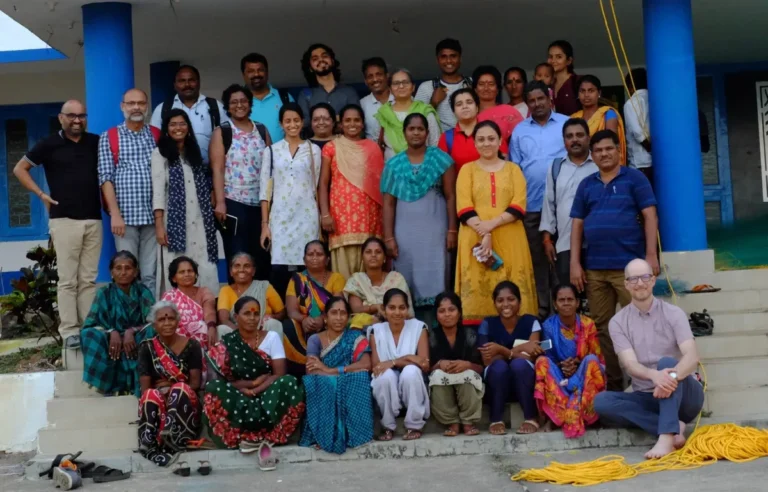
More than 20 researchers and collaborators from the three Indian research teams of the Dried Fish Matters (DFM) project gathered at the Daspalla Executive Court in Visakhapatnam, India, from December 9–11, 2019, for a three-day scoping research methodology workshop. The meeting brought together researchers working across Gujarat, South India, and West Bengal to exchange experiences, refine research methods, and strengthen collaboration as the project advanced its scoping research activities. Building on the earlier methodology workshop held in Cox’s Bazar, Bangladesh, in February 2019, the Visakhapatnam workshop followed a similar format, combining two days of methodological discussions with a day of field-based learning.
Sharing Research Experiences and Methodological Approaches
The workshop opened with an overview of DFM’s scoping research methodology and updates from the three Indian research teams. Presentations covered a range of ongoing research activities, including fisheries sector governance and state budgets in Gujarat, challenges facing dried fish economies in Kachchh, research on fisheries and dried fish in southern India, and emerging research activities in West Bengal.
Researchers also shared experiences from initiatives such as the Living Waters Museum, Fish4Food, and studies undertaken by Dakshin Foundation and other collaborating institutions. These exchanges highlighted the diversity of research approaches across the three regions and provided opportunities to identify common methodological challenges and areas for collaboration.
A central focus of the discussions was the need to develop a coordinated approach to scoping research while remaining attentive to the distinctive social, economic, and institutional contexts of dried fish economies across India.
Learning Through Field-Based Research
The second day was devoted to small-group pilot field visits designed to examine different segments of fish value chains and explore the practical application of DFM’s scoping research methods. The fieldwork programme included the Visakhapatnam Fishing Harbour and a proposed visit to Mangamari Peta fishing village. These exercises provided opportunities for researchers to consider how common research tools could be applied across different field settings and to reflect collectively on their methodological experiences. The field activities were followed by group reflections, with participants preparing observations and lessons for discussion during the final day.
Consolidating Lessons and Planning Ahead
The final day focused on reviewing lessons from the field exercises and identifying priorities for subsequent research. Discussions covered data management, individual and collective research outputs, and ways of connecting the work of the Indian teams with DFM’s wider research activities across South and Southeast Asia. The programme also included a discussion led by Kirit Patel and Sai Leela Modem on the relevance of India’s Street Vendors Act to the retail segment of dried fish economies, highlighting the importance of legal and institutional frameworks in understanding dried fish livelihoods and trade.
The workshop concluded with discussions on preparations for the next phase of DFM research, focused on deepening and applying the knowledge generated during the scoping phase. Beyond its methodological contributions, the Visakhapatnam workshop was an important opportunity for team building and knowledge exchange among DFM’s Indian research partners. The constructive discussions and collaborative field exercises helped strengthen coordination across the three research teams and reinforced the project’s commitment to an interdisciplinary and context-sensitive understanding of the social economy of dried fish.