
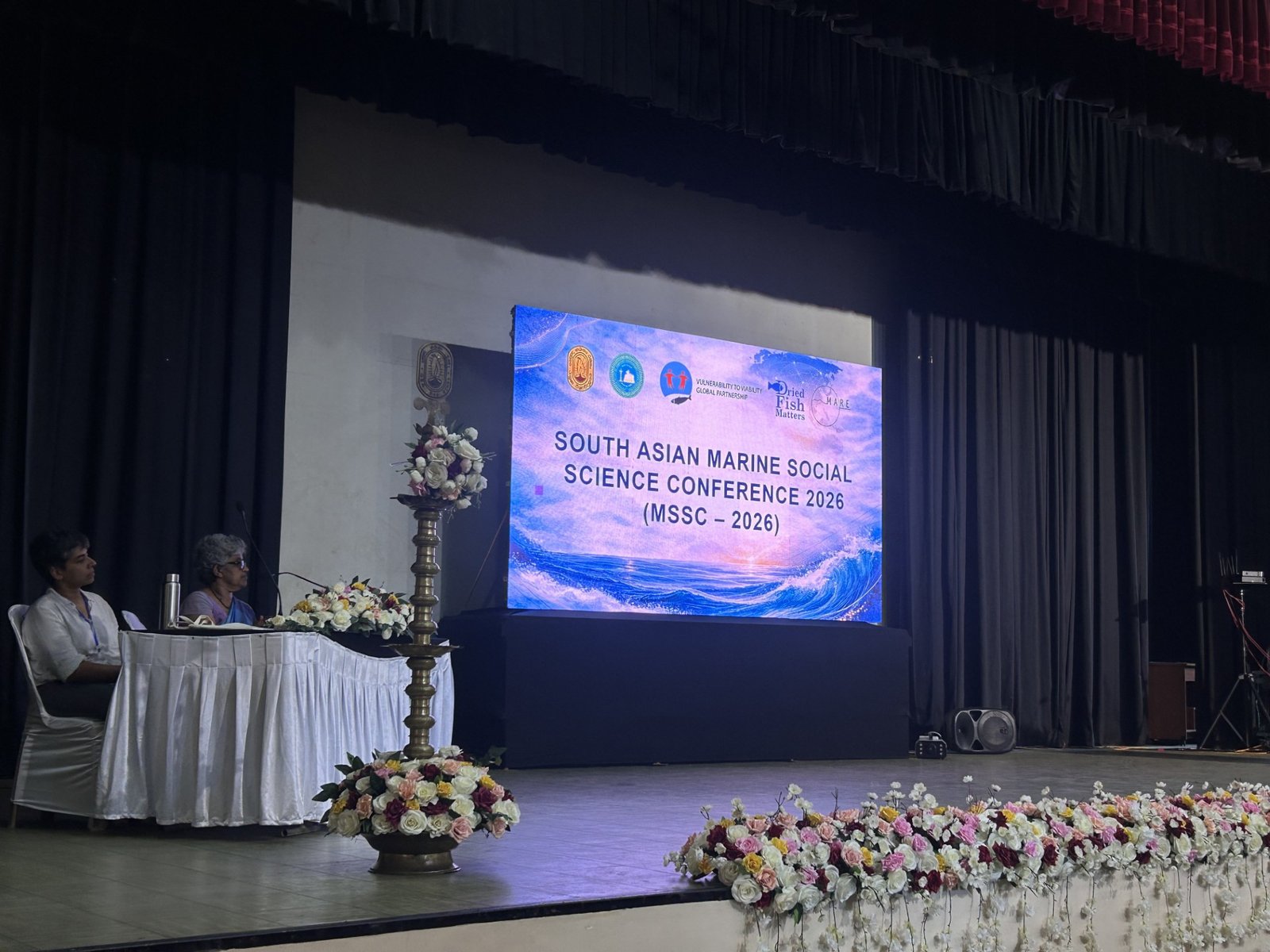
The Marine Social Science Conference (MSSC) 2026, hosted at the University of Ruhuna in Sri Lanka, marked a significant milestone for the Dried Fish Matters (DFM) project and its long-standing commitment to advancing socially grounded fisheries research. As both a founding contributor and co-organizer of the conference, DFM played a role in shaping MSSC as a platform for critical dialogue on marine social science issues across South Asia.
The conference brought together a vibrant community of scholars, practitioners and policymakers working across fisheries, livelihoods, governance and coastal development. Among them were DFM researchers from across South Asia, who contributed rich empirical insights on dried fish value chains: an often overlooked yet vital component of marine food systems. Their work highlighted the complex intersections of labour, gender, nutrition security and informal economies, situating dried fish within broader conversations on sustainability, justice, and development.
DFM’s strong regional presence was reflected in a diverse set of presentations across country teams. From Maharashtra, Ms. Abhilasha Sharma (Programme Officer at Dakshin Foundation) and Mr. Ishaan Khot (PhD candidate at the University of Manitoba) presented insights grounded in ongoing field research. Representing West Bengal, Ms. Raktima Ghosh (PhD candidate at the Indian Institute of Technology, Kharagpur) contributed perspectives from eastern India’s dried fish landscapes. The Bangladesh team was represented by Dr. Nahiduzzaman (WorldFish Bangladesh), Mr. Sami Naim Farook (PhD candidate at the University of Manitoba), and Dr. Samsul Alam (Bangladesh Agricultural University), each bringing complementary insights from research and practice. From Sri Lanka, Dr. Dilanthi Koralagamage represented DFM’s work within the local context.
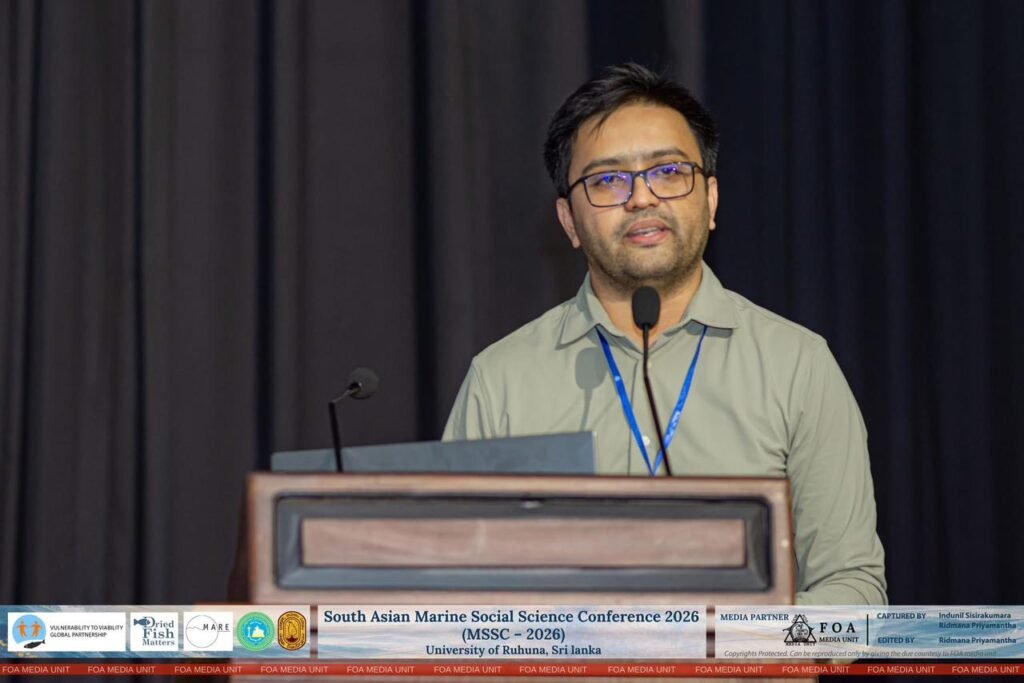
A key highlight of the conference was the keynote address delivered by DFM Director, Dr. Derek Johnson, who reflected on relational governance and raised critical questions around power, adaptability and the evolving nature of governance in small-scale fisheries. His address set the tone for deeper engagement with governance not merely as a set of institutions, but as dynamic relationships shaped by social, political and ecological forces.
DFM scholars used MSSC not only to present findings but to actively engage with pressing regional questions: How do small-scale fisheries sustain vulnerable populations? What governance challenges shape access to resources and markets? How can policies better reflect the lived realities of fishworkers, particularly women? By embedding dried fish research within these wider debates, DFM reinforced its core approach of understanding value chains as part of a social economy: deeply embedded in cultural, political and ecological contexts.
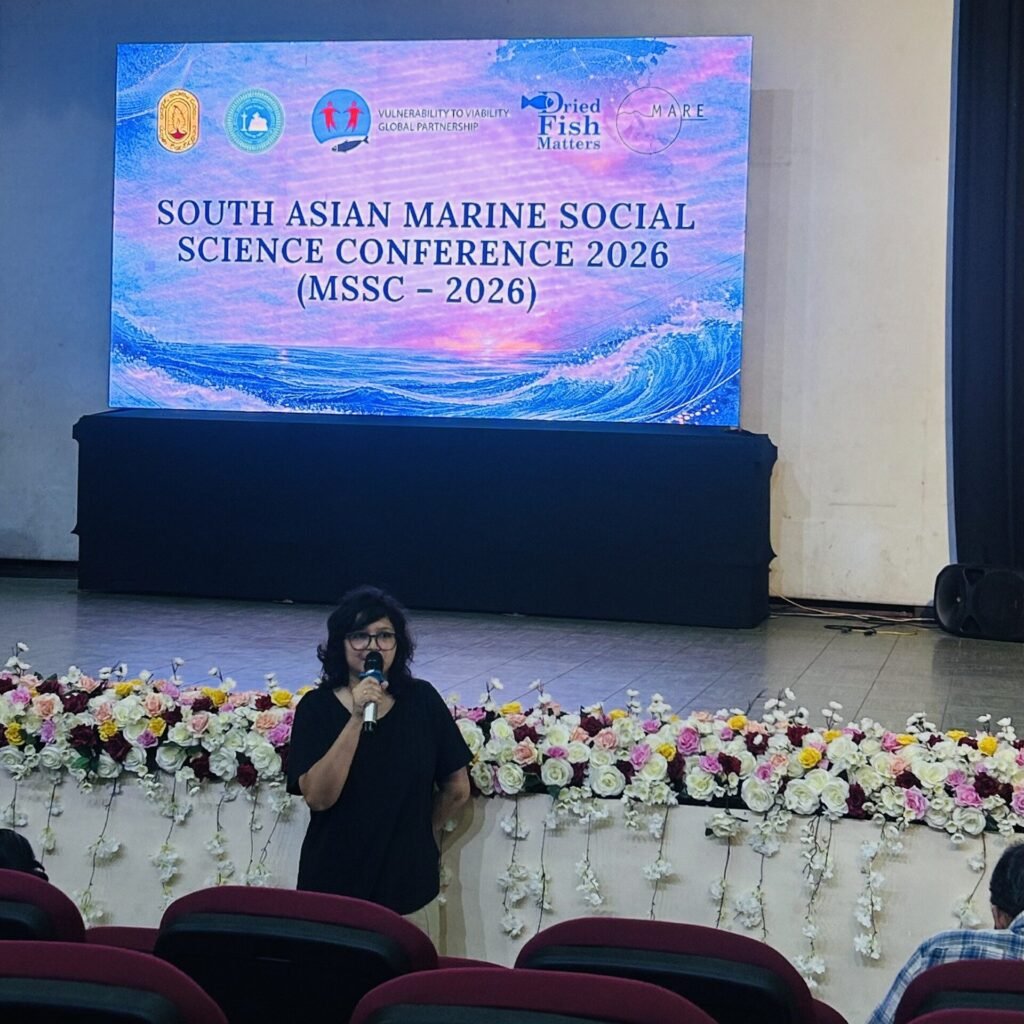
Beyond individual presentations, MSSC 2026 served as a critical moment for consolidating regional networks. Over the past several years, DFM has worked intentionally to build relationships across institutions and countries in South Asia. As DFM approaches its culmination, MSSC 2026 represents more than just a conference, it is a reflection of the project’s broader legacy.