Telangana, formed in 2014 from the northwestern region of Andhra Pradesh with Hyderabad as its capital, is a landlocked state whose fisheries sector depends entirely on its extensive network of inland water bodies. The state’s inland fisheries are supported by 77 major and medium reservoirs and more than 24,000 tanks, together covering roughly 570,000 hectares of water spread, making inland fishing an important livelihood source for many rural communities. These water bodies sustain a diverse range of freshwater fish species, and the state government has actively promoted fish seed stocking, cooperative-based fisheries management, and value-chain development to enhance productivity and incomes. Inland fisheries in Telangana play a vital role in rural employment, nutritional security, and poverty reduction, particularly among marginalized communities who rely on tank-based fishing, aquaculture, and small-scale marketing. As demand for fish continues to grow in both urban and rural markets, Telangana’s inland fisheries represent a critical sector with significant potential for sustainable expansion and improved livelihoods.
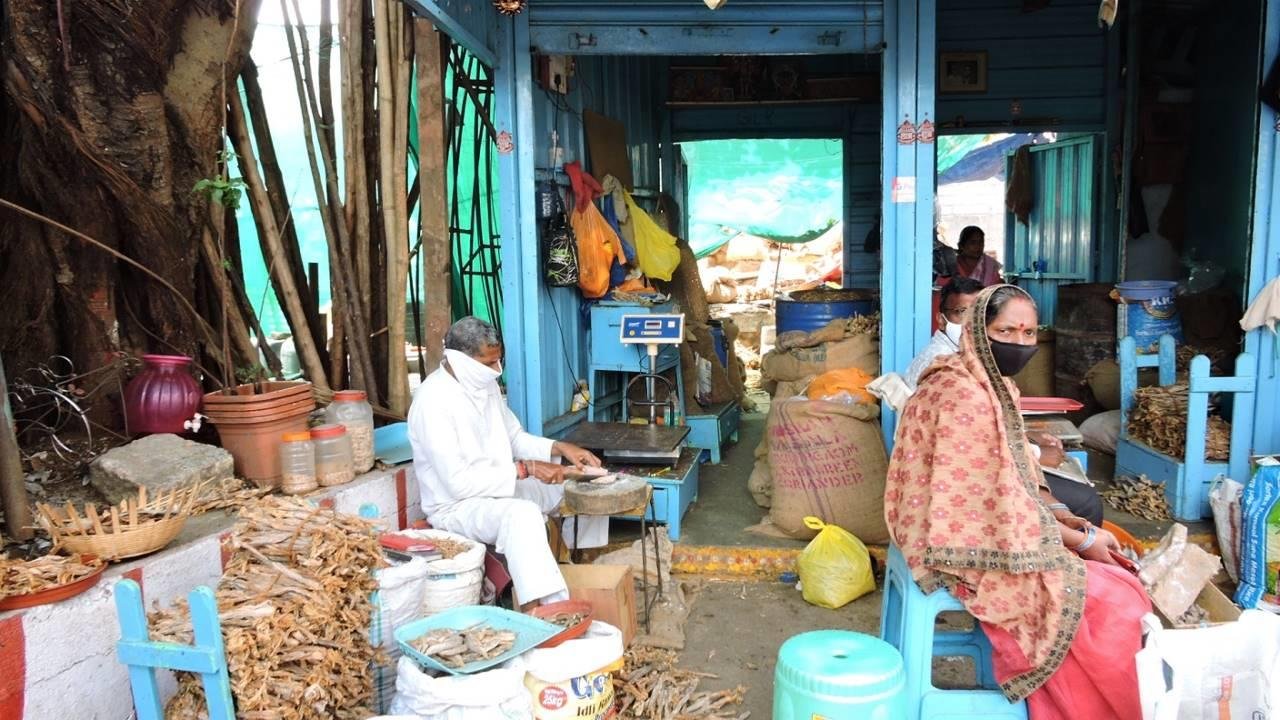
Dried fish in Telangana forms an integral yet largely overlooked component of the state’s inland fisheries economy, sustained by an extensive network of reservoirs, tanks, and backwaters that supply the raw material for drying. Despite being historically undervalued as “poor man’s food,” dried fish remains essential for marginalized communities, providing accessible protein and livelihood opportunities, especially for women who dominate post-harvest tasks such as cleaning, salting, drying, sorting, packing, and retailing in local shandies. Production, estimated at around 1,550 tonnes annually, is highly seasonal, peaking between February and June when receding water levels in major irrigation projects like Srisailam and Nagarjuna Sagar allow intensive harvesting. Much of the dried fish produced locally is exported to other Indian states and Bangladesh through key wholesale hubs such as Devarakonda, reflecting the state’s strong trade orientation despite limited local consumption due to cultural stigma, smell-related aversions, and class-based preferences. The value chain spans fisherfolk, village aggregators, and powerful wholesale traders, and is marked by informal governance, lack of infrastructure, and gendered inequalities in income and decision-making. Challenges, including unhygienic drying conditions, absence of storage facilities, opportunistic middlemen, political interference in water access, and rising pressure on freshwater resources, continue to constrain the sector’s potential, even as growing external demand, especially for poultry feed and cross-border trade, highlights significant untapped opportunities for livelihood enhancement and market development.