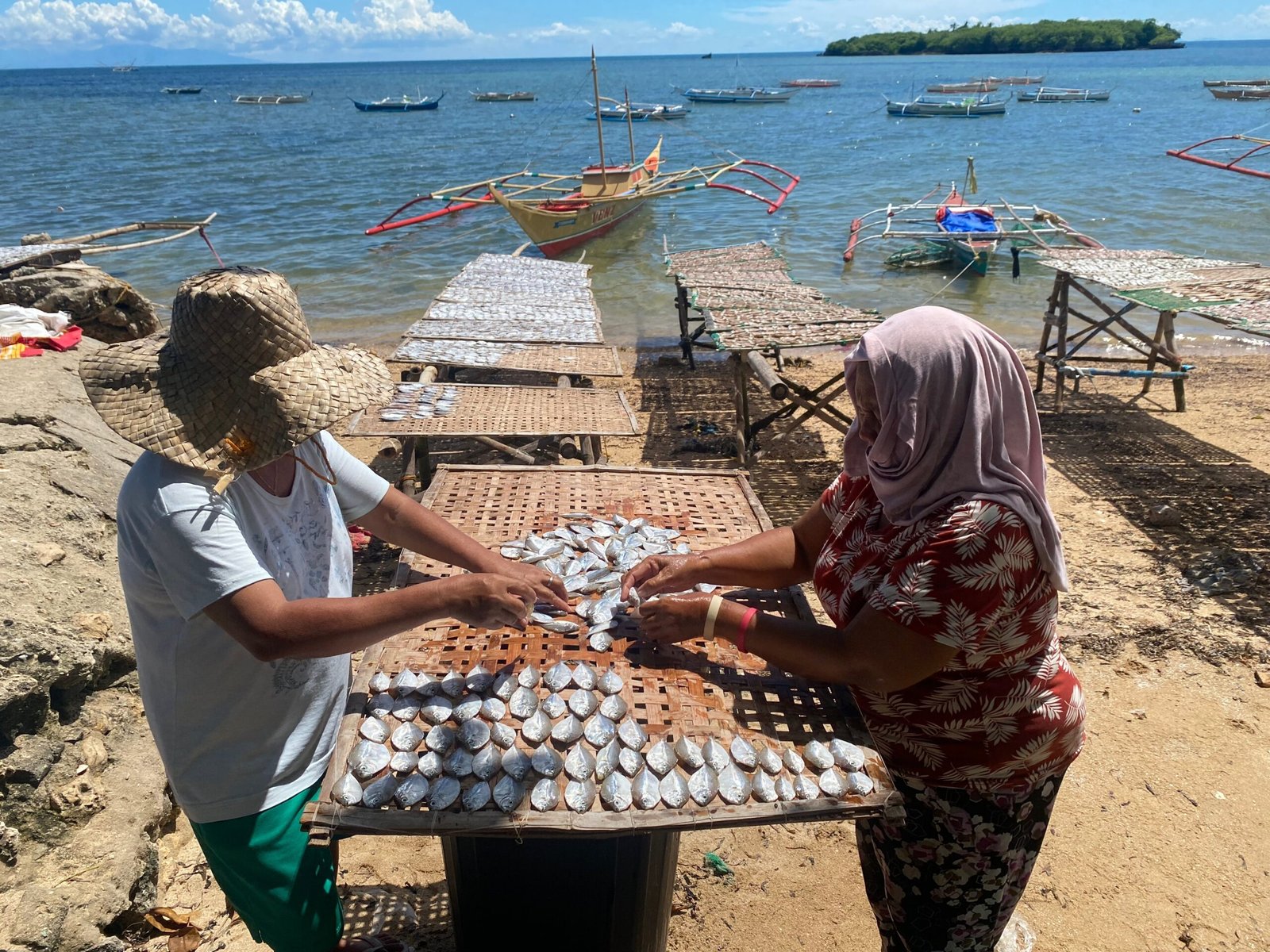
In addition to the regional teams, Dried Fish Matters research has also expanded in geographies such as the Philippines and the Great Lakes region in Africa through the work of Mr. Jessie Varquez (PhD candidate at the University of Manitoba) and Dr Deo Namwira (Post-doctoral scholar at the University of Manitoba), respectively.
As an archipelagic nation, dried fish figures prominently in the lifeways and foodways across the Philippines. Primarily sourced from small-scale fisheries, dried fish commodities are processed in coastal areas providing income and livelihood to thousands of families. While dried fish remains a dietary staple, particularly for lower-income groups, it is also a significant trade item, circulating through diverse local channels and reaching global markets via the Filipino diaspora. Increasingly, dried fish economies are entangled in the political economy of maritime and coastal zones, as dried fish producing communities are confronting and grappling with aquaculture expansion, rapid industrialization, and growth of tourism development, among other coastal squeezes. DFM’s special attention to the Philippine case opens synergies and possibilities to further explore the social economy of dried fish in the country and beyond.
In the African Great Lakes region, dried small pelagic fish such as dagaa are central to food security, livelihoods, and cross-border trade. Drying enables preservation in contexts with limited cold-chain infrastructure and facilitates distribution through informal and formal market networks. The value chain supports thousands of fishers, processors, many of whom are women, and traders, linking rural lakeshore communities to urban centers and international markets, including Canada. These dynamics unfold within complex transboundary lake systems where uneven regulatory frameworks and enforcement asymmetries across riparian states can generate unintended social and ecological outcomes along the value chain. As climate variability and regulatory pressures reshape fisheries systems, dried fish remains both an economic lifeline and a critical source of affordable protein for low-income households.