Maharashtra, located along a 720 km stretch of the Konkan coast, is one of India’s most important marine fish, producing states. Its coastline spans seven districts: Palghar, Thane, Mumbai Suburban, Mumbai City, Raigad, Ratnagiri, and Sindhudurg and encompasses diverse ecosystems such as sandy beaches, mangroves, mudflats, and creeks that support rich fisheries. The state landed 1.7 lakh tonnes of marine fish in 2021–22, with species like pomfret, mackerel, prawns, ribbonfish, and Bombay duck dominating catches. Mechanized and motorized fleets operate alongside traditional systems, sustaining over 87,000 coastal fishing households. Women play a crucial role in post-harvest activities, particularly in drying, curing, and marketing. Despite pressures from urbanisation, tourism, and coastal development, Maharashtra’s fisheries, especially small-scale and dried fish economies, remain integral to local livelihoods, cultural identity, and nutritional security.
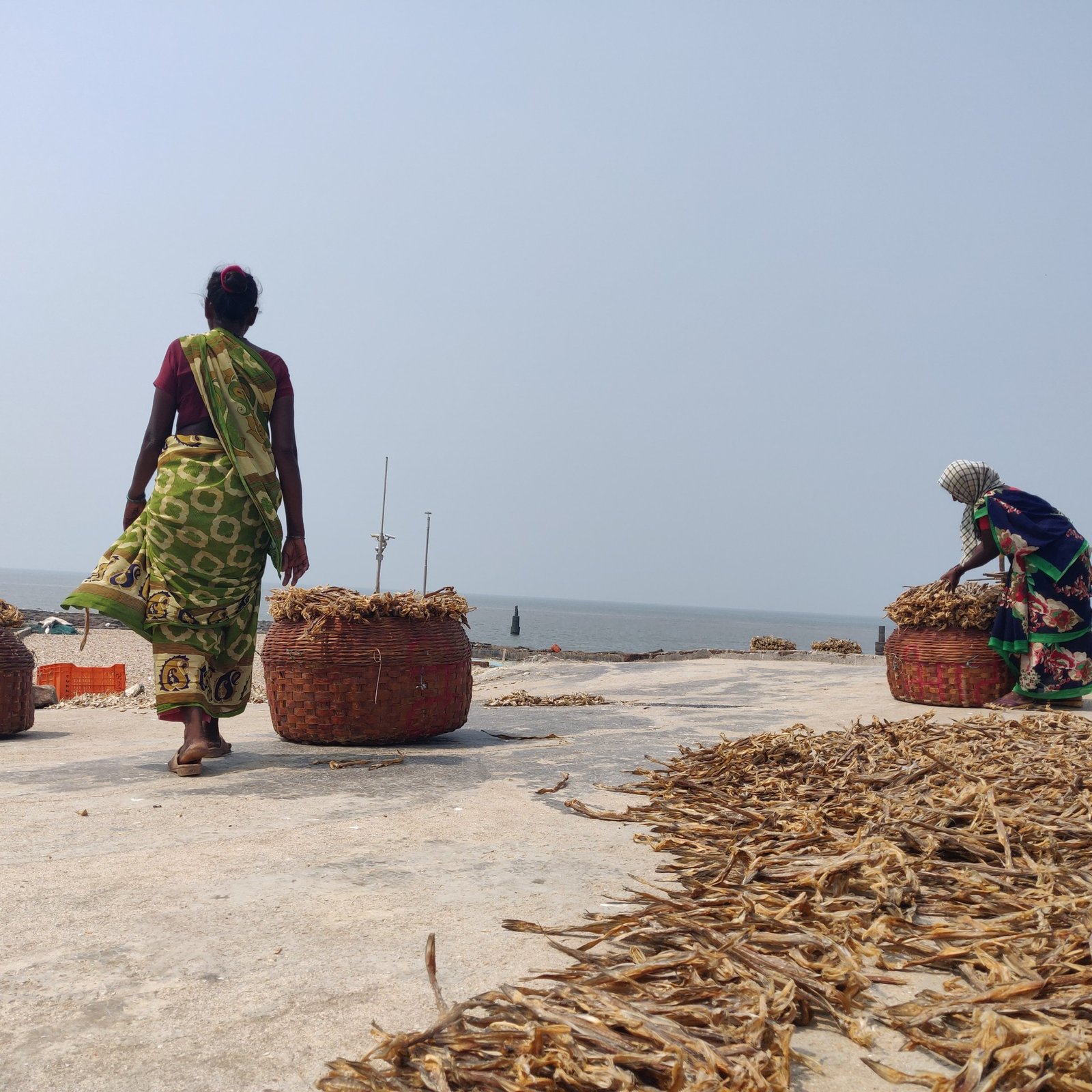
Dried fish is a longstanding and vital component of Maharashtra’s coastal economy, shaped by the state’s rich marine biodiversity and diverse fishing practices. Concentrated largely along the northern districts of Palghar, Thane, Mumbai, and Raigad, the sector relies on species such as Bombay duck, ribbonfish, anchovies, and shrimp, which are sun-dried or salt-cured using traditional methods like khale drying units, bamboo racks, and mandavs. Women make up the majority of the processing workforce, and both local fishing communities and migrant workers contribute to the upstream and midstream segments of the value chain. The dried fish trade connects coastal producers to inland tribal communities and urban markets, forming complex, long-standing networks that have shown resilience even during shocks like COVID-19. Despite its economic and cultural significance, the sector faces pressures from declining fish stocks, industrial development, coastal land loss, and urbanisation, which threaten access to traditional drying spaces and reduce visibility of this small-scale but essential industry.

Dried bombay duck processing in Madh, Maharashtra (Photo: Abhilasha Sharma)
Founder trustee, Dakshin Foundation
Naveen Namboothri is a founder trustee at Dakshin. He holds a doctoral degree from Annamalai University. In his functional capacity, he heads Dakshin’s Sustainable Fisheries programme. Trained as a marine biologist, he has worked in diverse coastal and marine systems across India particularly focusing on its island systems, Naveen’s research interests range from the natural history of marine organisms to understanding the interconnectedness between societies and ecosystems. He oversees the establishment and implementation of several marine conservation projects at Dakshin’s field sites such as the community-led fisheries management in the Lakshadweep and the Andaman Islands, long-term monitoring of coral reef ecosystems in the Andamans, and understanding of the drivers pushing fisheries in India down unsustainable pathways.
Programme officer, Dakshin Foundation
Abhilasha facilitates strategy and implementation for Dakshin’s Sustainable Fisheries and Livelihoods programme. Her work focuses on systems-level research and actions that promote participatory governance and sustainable management of natural resources. She is particularly drawn to complex socioecological challenges and works towards practical strategies that address the issues while promoting the well-being of dependent communities.
PhD candidate, The University of Manitoba
Dakshin Foundation is a not-for-profit, charitable, non-governmental organisation committed to environmental sustainability and social justice. Dakshin’s mission is to inform and catalyse conservation and natural resource management, while promoting and supporting sustainable livelihoods, social development and environmental justice. Dakshin’s team adopts interdisciplinary and trans-disciplinary approaches in their research and interventions, drawing from the fields of ecology, conservation biology, sociology, economics, and law. By strengthening networks at local and national levels and supporting advocacy campaigns, they work to build grassroots’ capacities to secure ecosystems and rights and engage in conservation and environmental decision-making. Dakshin’s goal is to promote ecologically and socially appropriate approaches to conservation and natural resource management in coastal, marine and mountain ecosystems in India.
Gupta, T., Paloma Chandrachud, Muralidharan M., Naveen Namboothri, & Derek S. Johnson. (2020). The Dried Fish Industry of Malvan: Supply chain, economy and relationship with the fishmeal industry. Dakshin Foundation / The University of Manitoba