
The scale of research, ambition, and size of DFM has meant that methodology necessarily has had to assume a larger role than in smaller and more focused research projects. For DFM, methodology is broader than only the development of robust strategies of data collection. Methodology extends out to include the strategies and tools that DFM has developed to coordinate among the many diversely located participants in the project. DFM’s methodology has depended, in effect, on an ongoing process of team building. As one would expect over a nine-year long project, that relational work has had stumbles but also has fostered creativity and a strong sense of purpose.
There are strong centripetal forces in large-scale projects such as DFM due to competing demands on the time of the project’s participants. As such, the most important element necessary for effective coordination in DFM has been the Project Manager. DFM has been most productive in periods when the project has had a full-time dedicated project manager to manage communications, support tools, and timelines.
Of secondary importance has been the infrastructure of research collaboration. For DFM, these have been online meeting platforms (Zoom and Teams), the Zotero reference manager, and cloud-based information management platforms that have included most importantly Wikimedia and Google Drive. The Dried Fish Matters Website has also been a key platform for sharing knowledge within and beyond the project.
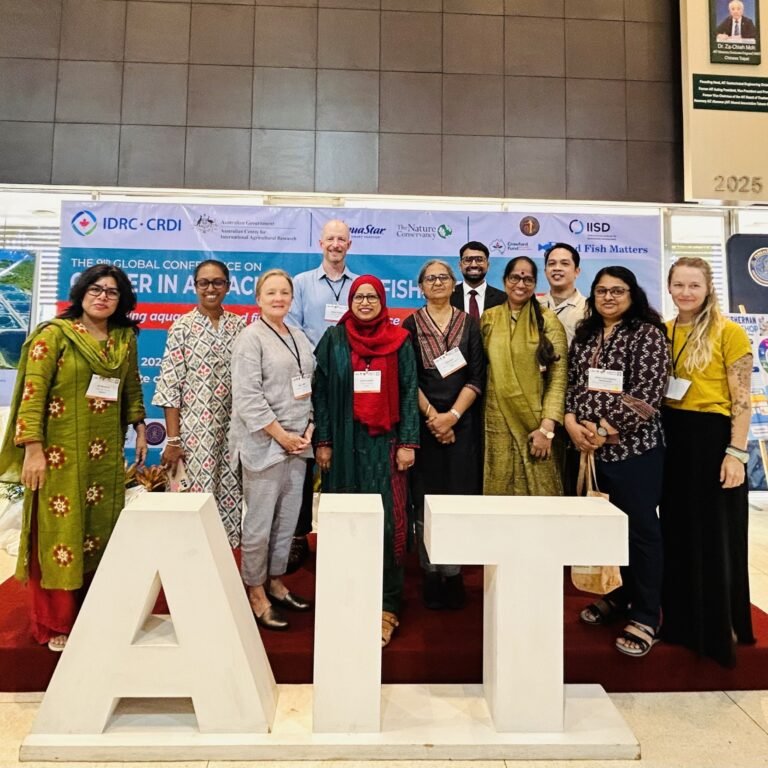
DFM Working Group 1 members at the GAF9 conference at the Asian Institute of Technology, Thailand
Effective research design in DFM has been built upon the project’s collaborative foundations. A major success of the project has been the collective operationalization of social economy as a theoretical foundation for the project’s research. The project has built upon social economy as a flexible yet rigorous approach to support the disciplinary, geographical, and thematic diversity that the project encompasses as the project has sought to achieve its research objectives.
On the recommendation of and with his support Ben Belton, DFM adopted a stacked value chain approach (SVC) as the undergirding framework for organizing research on dried fish spatially. An attraction for DFM of SVC, given the varied interests of and within the project, is that it provides tools for analyzing value chains that can be readily paired with diverse other approaches.
The SVC approach has two guiding mnemonics that have deeply informed DFM’s research design:
Building on a set of template questionnaires, DFM research teams, students, and collaborators have married the SVC logic to numerous other theoretical approaches and methods to analyze social economies of dried fish. These adaptations include the following:
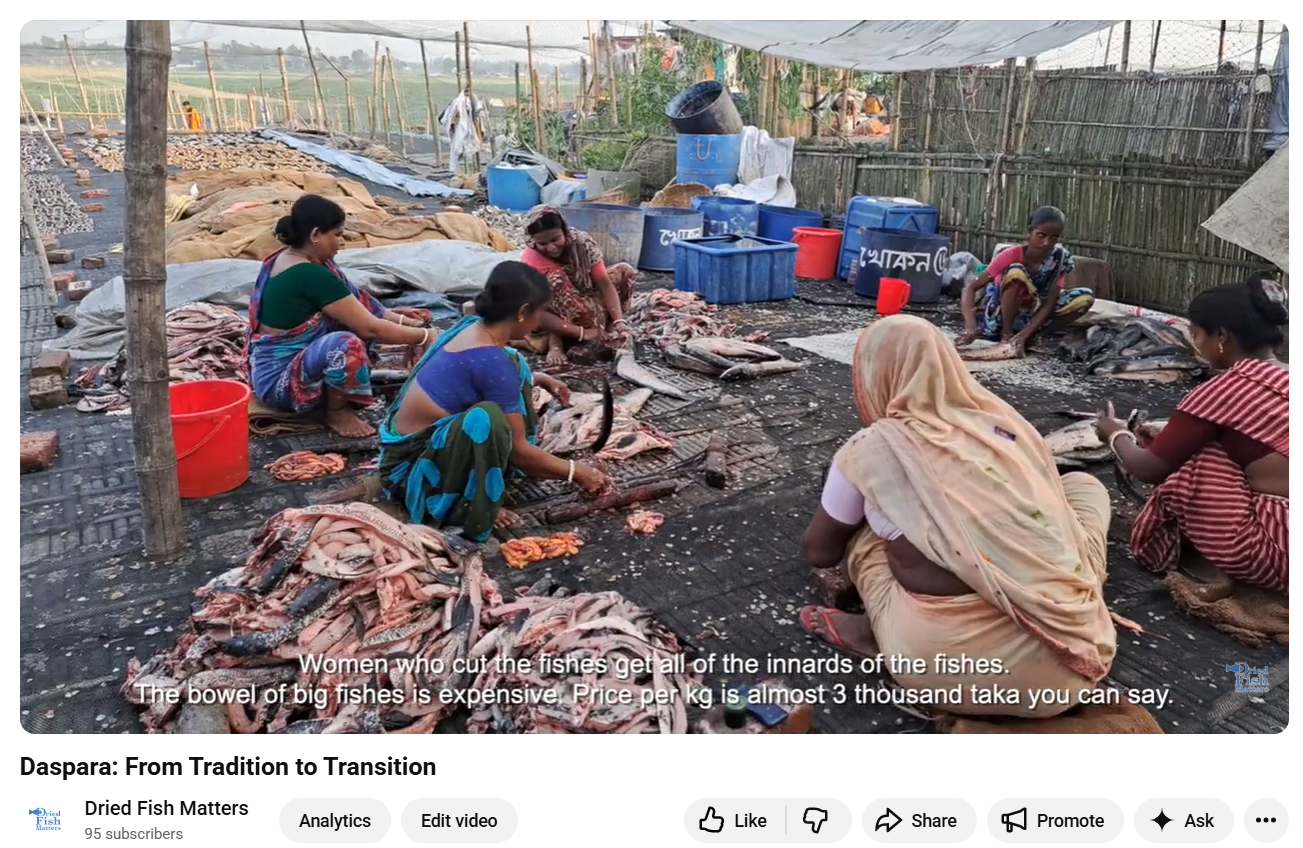
A still from a short documentary produced by Ms. Sara Nur