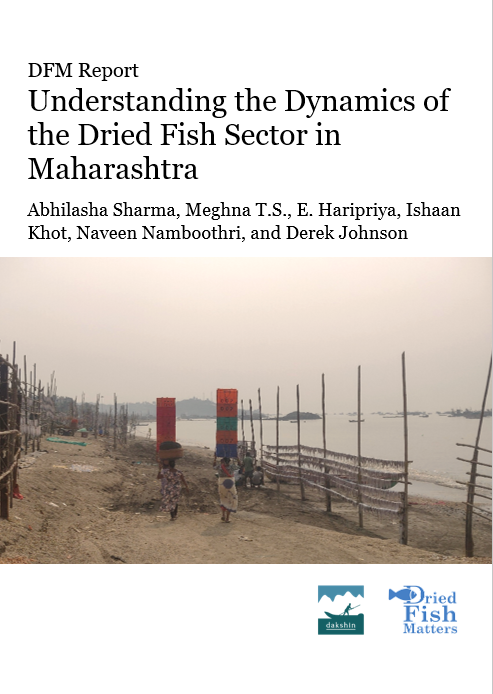
The practice of drying and curing fish is a tradition central to fishing communities worldwide. Yet, its potential to enhance the well-being of fishing community remains overlooked in policy and research. As part of the Dried Fish Matters (DFM) project, this study profiles the dried fish economy of Maharashtra, one of India’s major marine fish-producing states known for high-value products such as dried Bombay duck and prawns. Despite its significance, the sector operates informally, with limited recognition of its contributions to economic security, nutrition, fisher wellbeing, and resilience.Through literature review, interviews, and field observations across seven coastal districts of Maharashtra, the study reveals how environmental and socioeconomic factors shape fishing practices, processing methods, and trade flows. Production is concentrated along the northern coast, where species like prawns, Bombay duck, and ribbonfish dominate. Declining catches of high-value species have increased reliance on low-value fish, which are diverted to poultry feed, raising ecological and nutritional concerns. The sector is marked by complex, informal value chains, seasonal and migrant labour, and women’s central role in processing and trade. Despite pressure from urbanization, tourism, and regulatory gaps, dried fish remains vital for livelihoods, nutrition, and cultural identity. Strengthening this sector offers potential opportunities for inclusive policy, empowerment, and sustainable coastal economies.